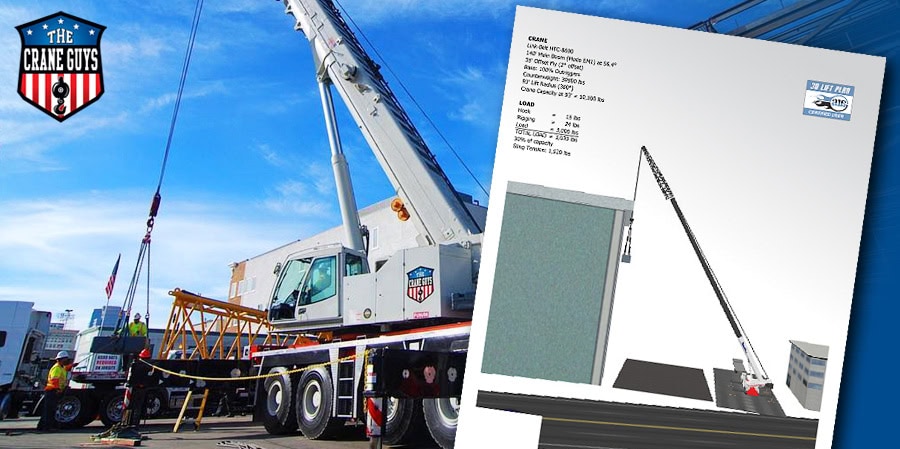
On its surface, a crane lift is simply a very large machine hoisting and setting massive, heavy objects in place. In actuality, however, this line of action is the result of an extraordinary amount of behind-the-scenes preparatory work. This work entails a considerable amount of planning and analysis to ensure a safe, regulatory compliant operation. That’s why you can count on The Crane Guys when you’re facing a major lift. Among Southern California’s leading providers of crane rental services, we put your project on solid ground with first-rate crane lift engineering supporting solid 3D lift plans.
Call: (562) 777-0600
Precision Crane Lifts Start with 3D Planning
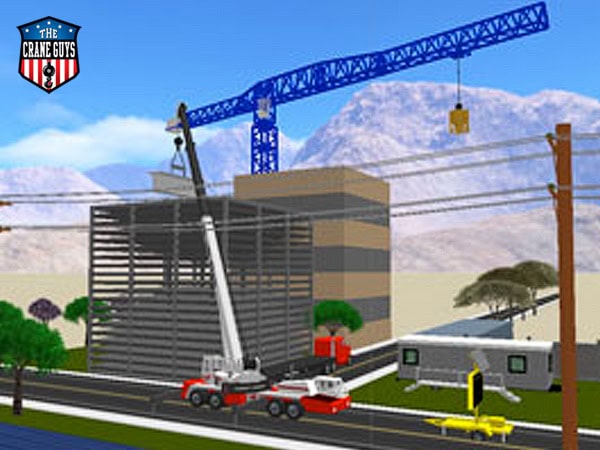
Committed to maximizing safety, The Crane Guys strives for ultimate precision on every crane lift project. Precision, however, doesn’t start at the project site; it starts with a 3D lift plan. As the term implies, 3D planning is the creation of a three-dimensional, computer simulation of a lift operation. This sophisticated process provides our planning team with an advanced visual representation of a crane’s position, rigging configuration, and possible work zone obstructions. Conducting a thorough analysis of this advanced data, our strategists can pinpoint potential risks and modify equipment deployment accordingly.
Why 3D Lift Planning Matters for Crane Projects
Because a 3D crane lift plan essentially is a rehearsal for the real thing, it gives our planning team the opportunity to create the ‘perfect performance’. Utilizing this exceptional software tool, we can improve efficiency and ensure safety in a virtual, ‘pre-show’ environment. Adjustments needed? No problem. We easily modify deployments backstage, thereby eliminating safety risks before they occur on site.
 The Advantage of 3D Lift Plans in Crane Work
 The Advantage of 3D Lift Plans in Crane Work
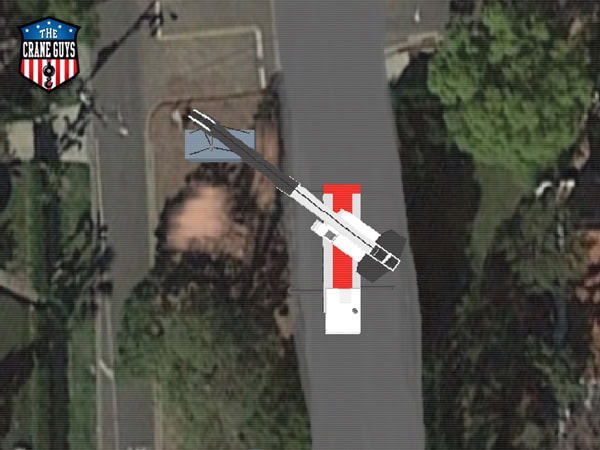
A 3D lift plan provides our team of strategists with a wealth of actionable information, all of which can be implemented in a simulated environment – long before the field operation begins. The information includes on-site obstructions, as well as important metrics pertaining to ground bearing pressure. Much of this visual gold, by the way, is provided by sophisticated satellite imagery. Ultimately, this means that what you see on the computer screen is what you’ll get. No surprises for the crew.
Safer Crane Lifts with 3D Planning Technology
The virtual preview improves worksite safety by identifying potential hazards and facilitating accurate communication among work crew personnel. Everyone’s been briefed and updated on what lies ahead. They know what to expect.
Along with safer conditions, advanced 3D planning also offers a cost efficiency advantage on several levels. First, the preview data optimizes crane selection, identifying the most cost- effective machine for the operation. This process helps keep rental costs to a comfortable minimum.
On screen modifications also contribute to cost reductions. Clearly, adjustments made with a mouse click are less time consuming than on site adjustments, which can stretch project duration by many hours.
What Makes a Crane Lift Critical?
A crane lift is considered critical when it meets one or more of an established set of criteria. One of these pertains to load weight. If the load tonnage exceeds 75% – 90% of a crane’s rated capacity, the lift qualifies as critical. But load weight alone isn’t the only consideration. Whenever cargo is unusually shaped, unstable, or difficult to rig, the operation earns a place in the critical category. It also will earn a place in this category any time multiple cranes are used (whether tandem or multi-crane lifts).
The presence of people also is addressed by the criteria. Whenever a lift occurs over occupied structures, roadways, or active job sites, it is considered critical. In fact, any time the operation poses a significant risk to people, as well as to property or infrastructure, it receives this designation.
Even environmental factors may come into play. If the presence of wind, power lines, or slopes are considered sufficiently intrusive, the lift is designated critical.
These important designations are determined by regulatory bodies such as OSHA, as well as by rigorous industry standards such as those established by the American Society of Mechanical Engineers (ASME). Particularly relevant are the organization’s B30 standards, which governs the operation of cranes, hoists, hooks, cableways, derricks, jacks, and slings. To ensure the continued relevance of these standards, a special B30 committee periodically reviews and modifies them as needed. View our insurance and certifications.
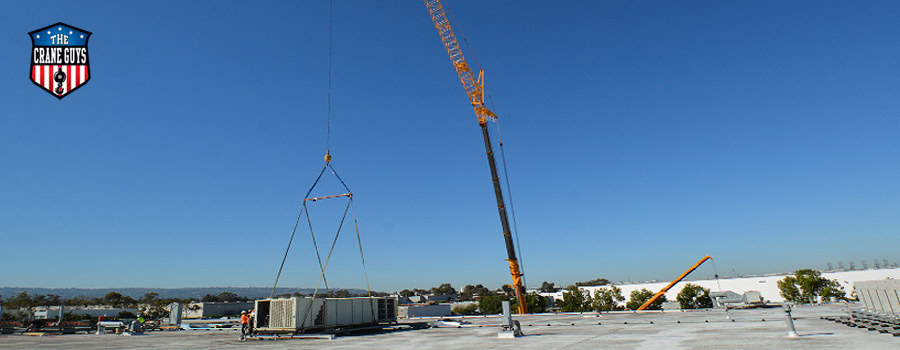
The Crane Guys has the capacity and experience to participate in a wide range of critical lift projects. These include:
- Setting bridge girders over active highways
- Multi-crane lifts of large industrial equipment
- Placing rooftop HVAC units in dense urban environments
- Lifting loads near energized power infrastructure
- Installing structural steel in high-rise construction
How Critical Crane Lifts Are Engineered
Critical crane lifts are engineered by our highly qualified team, who carry out a thorough, multi-step process. Among these key steps is a complete evaluation of a crane’s load bearing capabilities. During this stage, our team calculates the load’s precise weight, pinpoints its center of gravity, and identifies possible shifting that may occur. Once load information is established, we focus on crane selection. To ensure accuracy, we evaluate a range of variables, including boom length, counterweights, and load charts.
Rigging configurations also are determined during the critical crane lift engineering process. This step involves the selection of rigging components such as slings, shackles, and beams, all of which must have the proper weight-bearing capacity.
Along with selected equipment, ground conditions must be analyzed to establish soil stability. The purpose here is to ensure all cranes and supporting equipment are sufficiently balanced to prevent tipping.
 All this preparatory work is developed into a workable crane lift plan, which must conform to the standards of and receive approval from appropriate regulatory agencies. But approval isn’t the last word on a lift plan. Once it’s implemented, an appointed, on-site supervisor ensures field operations are carried out as designated.
How do you ensure the best results for your critical crane lift project? The answer is The Crane Guys. We get your project off the ground right with expert crane lift engineering with 3D lift plans. You won’t have to look far to find us. We offer Los Angeles County Crane Service, Orange County Crane Service, Riverside County Crane Service, San Bernardino County Crane Service, San Diego County Crane Service, Ventura County Crane Service and Kern County large crane services.
It’s easy to get started. Just contact us at your earliest convenience, and we’ll show you why you can count on our expert crane rental service 100% for your critical lift project.